L
O
A
D
I
N
G


Zoho, Odoo, ERPNext, Dynamics 365 and custom ERP, delivered by one accountable team.

Store every vendor's agreed price, currency, minimum order and lead time in the ERP, and let purchase orders pick them up automatically, with a warning when an invoice does not match.
Supplier price list software stores each vendor's agreed price, currency, minimum order quantity, pack size, lead time and validity dates in the ERP. Purchase orders pick up the agreed price automatically, RFQs compare quotes side by side, and vendor bills that differ from the PO and GRN are held at matching. Odoo, ERPNext, Zoho and Dynamics 365 all support vendor pricing.
UAE trading companies buy from a mix of local suppliers in AED and overseas manufacturers quoting in USD, EUR or CNY, often with prices that change by quantity, by season and by Incoterm, a pattern familiar to anyone running import management. Supplier price list software keeps those agreed buying prices inside the ERP, linked to each item and vendor, so the buyer raising a purchase order sees the right cost and the AP clerk can check the vendor invoice against it.
In most companies we visit, vendor prices sit in email attachments and PDF quotations. The buyer re-types them on the PO, the supplier invoices a slightly different figure, and the difference is paid because nobody has time to check. Over a year, small mismatches across hundreds of lines add up to real money, and the item cost used for selling prices becomes unreliable.
This page covers vendor-side pricing: storing price agreements, comparing quotations and enforcing agreed costs on POs and bills. Selling prices are covered on the customer price list software page, and the full PO cycle on purchase order management.
Each of these shows up as a margin problem months later, long after the purchase decision was made.
The best price agreed with a supplier in Guangzhou is in a PDF on the purchase manager's laptop. When he is on leave, the team reorders from the usual local supplier at a higher cost.
The vendor bills a few fils more per unit or adds a handling charge that was never agreed. Without a price check on the bill, AP posts and pays it.
Buyers request quotes from three vendors but compare them in a spreadsheet that is never saved. There is no record of why the winning supplier was chosen.
The PO asks for 250 units, the supplier only ships in cartons of 100, and the receiving team ends up with a quantity mismatch on the GRN.
Prices are agreed in USD or EUR but the buyer converts to AED by hand. Item cost and the selling price built on top of it are based on a guessed rate.
Suppliers announce increases by email. Nobody updates the system, so the business keeps selling at old margins while paying new costs.
The aim is a single source of agreed costs that the buyer, the storekeeper and the AP clerk all work from.
One shared database: every step updates stock, finance and reports in real time.
Supplier pricing connects purchasing, inventory costing and payables.
Price per item and supplier with currency, minimum quantity, pack size, lead time and validity dates.
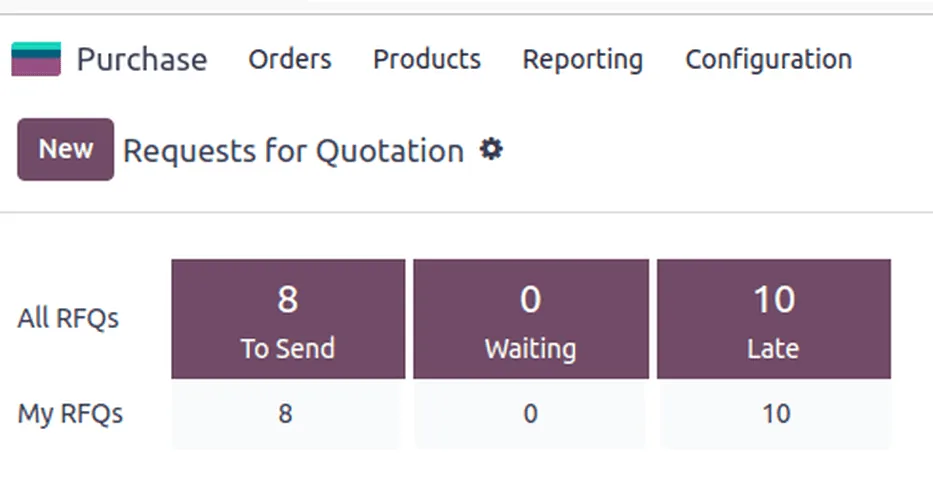
Send one request to several vendors and record each reply against the same items for side-by-side comparison.
The agreed price and preferred vendor are suggested automatically when the buyer adds an item.
TRN, payment terms, currency, Incoterms and approved status held on the vendor record, linked to supplier management controls.
Vendor bills are compared with the PO price and the GRN quantity, with a tolerance and a hold on mismatches.
Agreed purchase prices plus freight and duty feed item cost, so selling prices are based on real landed cost.
Purchasing managers need to see where they are paying more than agreed, and which agreements need renegotiating soon.
Each platform stores supplier prices differently. This is a practical summary; confirm the detail for your edition.
| Zoho | Odoo | ERPNext | Dynamics 365 | |
|---|---|---|---|---|
| Where vendor prices live | Purchase price lists in Zoho Books and Zoho Inventory | Vendor pricelist lines on the product (vendor, price, min qty, lead time) | Buying price lists with Item Price per supplier | Purchase price lists in Business Central |
| Validity dates | Limited; handled by updating lists | Start and end dates per vendor line | Valid from and upto on item prices and pricing rules | Starting and ending dates per line |
| RFQ and comparison | Basic; often done with custom fields or Zoho Creator | RFQ in the Purchase app; alternatives comparison in recent versions | Request for Quotation, Supplier Quotation and comparison report | Purchase quotes; comparison typically via reports or extensions |
| Minimum quantity and lead time | Not native per vendor; can be customized | Native per vendor line | Min order qty on item and lead time on supplier item | Minimum quantity per price line; lead time on item vendor |
| Price check on bill | Manual review or custom rule | Bill control based on ordered or received quantities | Validation via settings and custom rules | Matching through receipt and invoice posting; approvals available |
| Best fit | Smaller buyers with few vendors per item | Traders with several vendors per item and frequent RFQs | Companies wanting formal RFQ and quotation records | Larger importers with structured purchasing |
Behavior varies by version and edition; we verify it during discovery.
These are the data sources and outputs we commonly connect.
Purchase pricing has tax consequences, especially for imports. Confirm treatment with your tax advisor.
Goods imported into the UAE are subject to import VAT, often accounted for through reverse charge in the VAT return. The vendor price in foreign currency and the customs value must both be recorded correctly.
Local suppliers registered for VAT must issue tax invoices with their TRN. The vendor record should hold the TRN so input VAT can be supported.
Foreign currency amounts on bills need conversion to AED for VAT reporting. Configure a consistent rate source rather than manual rates per bill.
Keep quotations, price agreements and approval history with your accounting records for the period UAE tax law requires, generally at least five years.
General information, not tax or legal advice. Rules change; confirm current FTA, MOHRE and Ministry of Finance guidance with your advisor.
These are qualitative outcomes; the size depends on your purchase volume and current discipline.
Bills that differ from the agreed price stop at matching instead of going straight to the payment run.
Buyers can show a supplier its price history and the competing quotes when renegotiating.
Selling prices are based on current agreed costs, not last year's numbers.
Agreements live in the system, so purchasing continues normally when someone is on leave.
As an improvement on an existing ERP this often takes 3-6 weeks; as part of a full purchasing rollout it runs alongside the PO setup.
Durations are typical ranges; your plan is agreed after discovery.
Gather current quotes, contracts and price files for the top vendors and items by spend.
Agree price structure, currencies, tolerances for bill matching and the RFQ approval route.
Configure vendor price records, import prices and set up quotation comparison.
Compare recent bills against stored prices to confirm tolerances catch real mismatches.
Buyers raise POs from system prices; purchasing reviews variance and expiry reports monthly.
We configure the system for the rules UAE businesses report against, and test it before go-live.
General information, not tax or legal advice. Confirm current requirements with the FTA, MOHRE or your advisor. See all UAE compliance guides.
On-site workshops in Dubai, Abu Dhabi and Sharjah, and remote or on-site delivery across the Northern Emirates and free zones.
Official sources and references
Facts on this page were checked against these sources in October 2026. Rules change, so confirm current requirements before acting.
Still have a question? Our consultants are happy to help.
Ask an ExpertYes. Most suppliers send Excel or CSV files. We map their item codes to yours once, then each new file can be imported with a validity date, so the old prices remain as history.
You can set a preferred vendor, or have the system suggest the lowest valid price that meets the quantity and lead time. The buyer can still override with a reason.
The bill is flagged at matching against the PO and the GRN. AP either asks the supplier for a corrected invoice or a credit note, or a manager approves the difference. See supplier statement reconciliation for clearing disputes.
Usually not. The vendor price is the ex-works or FOB price; freight, duty and clearing are added through landed cost so item cost is complete.
Yes. Many overseas vendors require a deposit before production. We link the advance to the PO so it is offset on the final bill, as described on our supplier advance management page.
It depends on how many vendors you compare per item and how formal your RFQ process is. We implement Zoho, Odoo, ERPNext and Dynamics 365, and recommend based on your purchasing volume and existing systems.
Related Solutions
Related Industries
Related ERP Platforms
Share a sample of supplier quotes and bills and we will show how the ERP would enforce the agreed prices.
Dubai, United Arab Emirates