
L
O
A
D
I
N
G


Zoho, Odoo, ERPNext, Dynamics 365 and custom ERP, delivered by one accountable team.

FIFO means two different things in most companies: moving the oldest stock out first, and costing sales at the price of the oldest purchases. A good ERP handles both, and keeps them consistent with your books.
FIFO in an ERP works on two levels. Physically, picking rules propose the oldest received stock so non-dated goods such as tiles, cables and spare parts do not age on shelves. Financially, each issue is costed at the oldest remaining purchase layer, with landed costs like freight and customs duty added to the correct receipt layer, so cost of goods sold and closing stock stay accurate.
An ERP for FIFO inventory in the UAE supports first in, first out on two levels. Physically, it proposes the oldest received stock when picking, so goods without an expiry date (cables, tiles, garments, spare parts, packaging) do not age in the racks. Financially, it values each issue at the cost of the oldest remaining purchase layer, so cost of goods sold and closing stock follow the order in which you actually bought.
The costing side is where UAE trading companies run into trouble. Prices for steel, copper cable, rice or electronics can move sharply between shipments (a daily reality for the businesses on our trading company inventory software page), and freight, customs duty and clearing charges arrive weeks after the goods. If the system uses one standard cost, or a spreadsheet adds landed costs at month end, margins on individual invoices are wrong and closing stock does not match the receipts it came from. FIFO cost layers, updated with landed costs when bills arrive, fix that.
For dated goods, physical rotation should follow expiry rather than receipt, which is the subject of our FEFO inventory page. This page focuses on FIFO for non-perishable stock and on FIFO as a valuation method, including how it interacts with negative stock, returns and corporate tax reporting.

These issues appear when FIFO is a policy on paper but not built into the ERP.
New deliveries are stored in front of older pallets, so the old ones age, fade or become obsolete. Tiles, paint and garments from old collections become hard to sell.
When purchase prices rise or fall quickly, a blended cost makes some invoices look more profitable than they were. Sales managers then price new quotes on misleading margins.
Freight, customs duty and clearing invoices arrive after goods are sold. Without layer-level allocation, cost of sales understates the real cost and stock values drift.
Selling before the GRN is posted creates negative stock, and FIFO costing then uses estimated or zero costs. Corrections later distort several months of margins.
Finance and the warehouse produce different stock values at month end. Auditors ask for the FIFO layers behind closing stock and the team cannot produce them, a symptom covered on our inventory accuracy page.
Each receipt creates a cost layer and each issue consumes the oldest one, physically and financially.
One shared database: every step updates stock, finance and reports in real time.
FIFO touches warehouse, purchasing and accounting, so all three need to be configured together.
FIFO selected per item, product category or company, with perpetual valuation posting to the general ledger.
Every GRN creates a dated cost layer at the purchase price in AED, converted from the supplier currency.
Freight, duty, insurance and clearing charges allocated by value, weight or quantity to specific receipts.
FIFO picking strategy so pick lists propose the oldest received stock in each location.
Settings that block or limit negative stock so FIFO layers are never consumed before they exist.
Customer returns re-enter at their original cost; supplier returns remove the right layer.
Inventory, COGS and price difference accounts mapped so stock valuation reconciles to the balance sheet.
Stock valuation by layer, aging by receipt date and margin by invoice line.
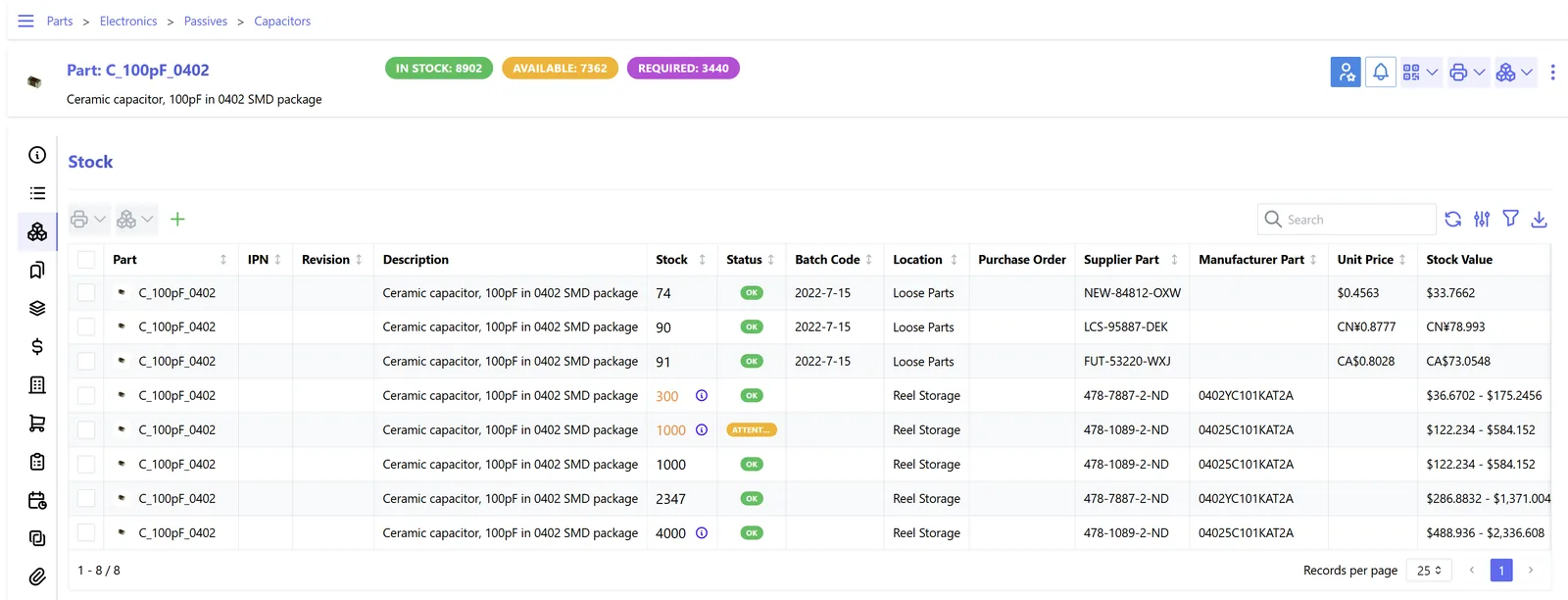
This view brings the finance and warehouse sides of FIFO together.
All four platforms support FIFO costing, but they differ in landed cost handling and when costs are adjusted. Verify for your edition.
| Zoho | Odoo | ERPNext | Dynamics 365 | |
|---|---|---|---|---|
| FIFO costing | Zoho Inventory and Zoho Books value stock on a FIFO basis by default; check whether other methods are available for your organization | FIFO set on the product category with automated (perpetual) valuation | FIFO or Moving Average selectable per item or as a default | FIFO among several costing methods per item (Business Central) or item model group (Supply Chain Management) |
| Landed costs | Landed cost allocation on purchase bills | Landed Costs feature on receipts, allocated by quantity, weight, volume or value | Landed Cost Voucher against receipts | Item charges (Business Central) or landed cost features (Supply Chain Management) |
| Physical FIFO picking | Picking is mostly manual; oldest stock not enforced automatically | FIFO is the default removal strategy | FIFO queue drives batch-less valuation; physical picking by bin requires setup | Bin rankings and pick rules; FIFO picking by configuration |
| Cost adjustments | Recalculated when back-dated transactions are entered | Revaluation entries when landed costs are validated | Reposting of later entries after back-dated transactions | 'Adjust Cost - Item Entries' process (Business Central) or inventory close (Supply Chain Management) |
| Best fit | Traders who want simple FIFO with minimal admin | Distributors needing FIFO, landed costs and multi-step warehouses | Traders and manufacturers wanting control over valuation at low license cost | Groups needing formal inventory close and multiple costing methods |
Configuration determines results. We test FIFO with your price history and landed cost patterns before go-live.
FIFO cost layers are only right if supplier, freight and customs data reach the ERP on time.
Inventory valuation affects your profit and your tax position. Confirm treatment with your auditor and tax advisor.
UAE companies generally report under IFRS, where IAS 2 allows FIFO or weighted average cost and does not allow LIFO. Use the same method for inventories of a similar nature and use.
UAE corporate tax starts from accounting profit, so the costing method affects taxable income. Changing method needs justification and consistent treatment; see our corporate tax ERP page and confirm with your advisor.
Import VAT and customs duty are handled differently: recoverable import VAT does not belong in stock cost, while customs duty usually does. Map them correctly in landed cost setup and confirm with your tax advisor.
Keep purchase, receipt and costing records for at least five years under UAE tax record-keeping rules, so FIFO layers can be rebuilt for an audit.
General information, not tax or legal advice. Rules change; confirm current FTA, MOHRE and Ministry of Finance guidance with your advisor.
These are qualitative improvements; actual impact depends on your price volatility and stock turns.
Invoice-level margins reflect the cost of the stock actually sold.
FIFO picking moves older receipts out before they become obsolete.
Stock valuation reconciles to the ledger without spreadsheet adjustments.
Auditors can see the cost layers behind closing stock.
Typical ranges; switching costing method on a live system needs careful cut-over planning with your accountant.
Durations are typical ranges; your plan is agreed after discovery.
Agree costing method by item group, landed cost rules and GL mapping with finance.
Set up valuation, landed costs and negative stock rules; test with real price history.
Load opening stock with costs, ideally by receipt date where FIFO history matters.
Run a full close and reconcile valuation to the ledger before scaling up.
We configure the system for the rules UAE businesses report against, and test it before go-live.
General information, not tax or legal advice. Confirm current requirements with the FTA, MOHRE or your advisor. See all UAE compliance guides.
On-site workshops in Dubai, Abu Dhabi and Sharjah, and remote or on-site delivery across the Northern Emirates and free zones.
Official sources and references
Facts on this page were checked against these sources in October 2026. Rules change, so confirm current requirements before acting.
FIFO gives margins closer to actual purchase prices when costs move, while weighted average smooths them. Both are acceptable under IFRS. Choose with your auditor based on how volatile your purchase prices are.
Yes. Costing follows receipt order in the ledger regardless of which carton is picked. Physical FIFO is still advisable for goods that age or change between collections.
The system creates negative stock and costs the issue at an estimate. When the receipt is posted the cost is corrected, which changes past margins. Our negative stock page explains how to prevent it.
Freight, duty and clearing charges are allocated to the specific receipt. If part of that receipt has been sold, the share relating to sold units goes to cost of sales and the rest stays in stock.
Usually at a financial year start, with an opening revaluation agreed with your auditor. Mid-year switches are possible on some platforms but harder to explain.
Yes, especially for materials bought at changing prices. Our construction inventory software page covers site stores and issue to projects.
Related Solutions
Related Industries
Related ERP Platforms
We will review your costing method, landed cost process and stock rotation, and recommend a FIFO setup on the right platform.
Dubai, United Arab Emirates