
L
O
A
D
I
N
G


Zoho, Odoo, ERPNext, Dynamics 365 and custom ERP, delivered by one accountable team.

Estimators in Dubai and Abu Dhabi still price tenders from spreadsheets copied from the last job. An ERP-linked estimating process keeps rates current and carries the winning estimate straight into cost control.
Construction estimation software linked to an ERP lets UAE contractors price tenders from a shared cost library of labor, material and plant rates instead of copied spreadsheets. Estimators import takeoff quantities, build unit rates, compare subcontractor quotes, add preliminaries and risk, and get the estimate version approved. The winning estimate converts directly into the project budget for cost control.
Construction estimation software in the UAE has one job: turn drawings, specifications and a client BOQ into a price the company can actually build for. In most fit-out, MEP and civil contractors we work with, that job is done in a workbook that started life on a project three years ago. Labor rates, rebar prices, crane hire and overhead percentages are typed in by hand, and nobody is quite sure which tab holds the latest supplier quote.
The estimator's week is a sequence of deadlines: a tender issued through a developer's portal, a site visit, queries to the consultant, subcontractor enquiries for MEP or facade packages, and a submission date that rarely moves. The pricing itself breaks down into quantity takeoff, unit rate build-up from labor, material and plant, preliminaries such as site offices, insurance and temporary power, then overheads, risk and margin. When the job is won, the same numbers should become the project budget, but in practice the site team often rebuilds the budget from scratch.
This page covers the estimating step only: the cost library, rate build-up and estimate versions. Structuring the client's bill of quantities is covered under construction BOQ software, and the bid pipeline itself under construction tender management. Here we focus on how an ERP makes the estimate faster to produce, easier to review and reusable after award.

These problems show up in almost every contractor that prices more than a handful of tenders a month.
Steel, cement and copper cable prices move month to month, but the rate sheet is whatever was in the last tender file. Margins erode before the project even starts.
Two estimators price the same blockwork item with different gang sizes, productivity and wastage assumptions. Management cannot compare tenders or see why one bid was higher.
Package quotes for MEP, glazing or waterproofing arrive as PDFs in personal inboxes. The lowest compliant quote is hard to find and exclusions are missed.
Site staff, temporary facilities, insurance, bonds and the duration-dependent costs are added as a lump percentage. On long programs this understates the real cost.
After award, the project team creates its own budget with different cost codes. Nobody can later compare what was priced against what was spent, so the next estimate learns nothing.
Value-engineering rounds and clarifications create several prices for the same tender. Without versions, it is unclear which figure was submitted and why it changed.
The same steps apply to a villa fit-out or a warehouse shell; only the size of the cost library changes.
One shared database: every step updates stock, finance and reports in real time.
Estimating draws on data that already lives in the ERP; the aim is to stop retyping it.
Labor trades with hourly cost, materials with latest purchase prices, plant with internal hire rates, all maintained once.
Composite items combining resources with productivity and wastage factors, so the unit rate recalculates automatically.
Recent purchase orders and supplier price lists feed material rates instead of guesswork.
Package enquiries sent from the system, quotes logged against each package, with exclusions noted.
Each estimate is tied to an opportunity with client, consultant, submission date and win probability.
The approved estimate becomes the budget by cost code and WBS when the contract is signed.
Drawings, specifications, addenda and query logs stored against the tender, with revision tracking.
Win/loss by sector and client, estimated versus actual margin and rate history by item.
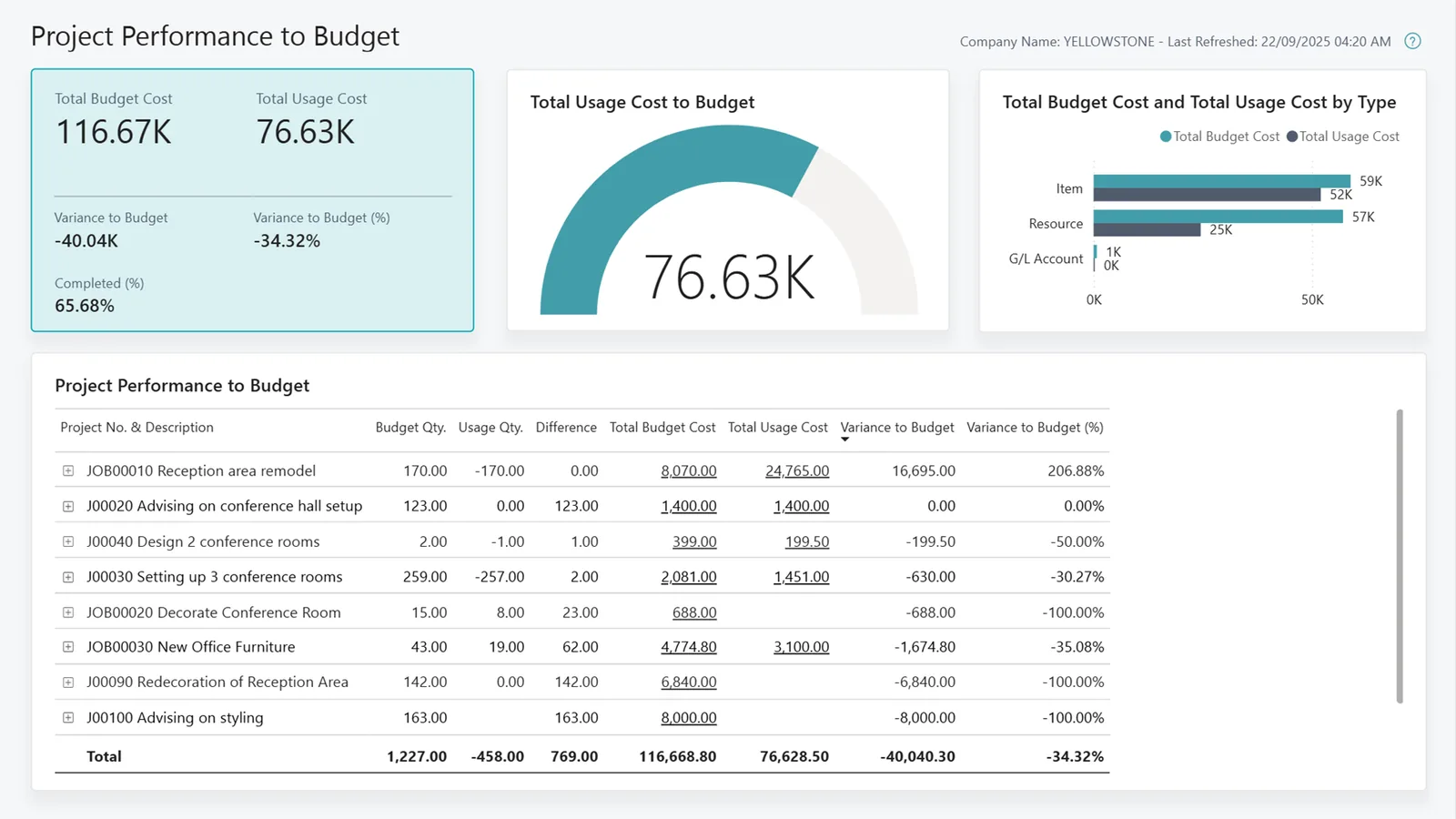
An estimating manager needs to see workload, deadlines and pricing consistency, not just a list of files.
None of the four mainstream platforms ships a full quantity-surveying estimating suite out of the box; each gets there differently. Confirm details for your edition.
| Zoho | Odoo | ERPNext | Dynamics 365 | |
|---|---|---|---|---|
| Cost library | Items and price lists in Zoho Books or Inventory; rate build-up usually built in Zoho Creator | Products with costs; kits and BoM-style structures can model composite rates | Items, price lists and Product Bundles; custom DocTypes are common for rate build-up | Resources, items and job planning lines in Business Central |
| Rate build-up | Custom app (Zoho Creator) linked to Zoho Books items | Typically via estimation apps from the Odoo App Store or Studio customization | Custom DocType in Frappe Framework, often a small development effort | Extensions from AppSource or a partner-built extension |
| Subcontract quotes | Vendor quotes tracked in Zoho Books or Creator | Purchase RFQs and call-for-tender agreements to compare bids | Request for Quotation and Supplier Quotation comparison | Purchase quotes and vendor comparison |
| Link to CRM | Zoho CRM deals linked to estimates | Odoo CRM opportunity to quotation | ERPNext CRM opportunity to quotation | Dynamics 365 Sales opportunity to Business Central |
| Estimate to budget | Push to Zoho Projects or Books budgets | Analytic accounts and budgets per project | Budget against project and cost center | Job budget lines from the estimate |
| Best fit | Small to mid contractors wanting low cost and custom forms | Contractors wanting an integrated suite with customization | Cost-conscious firms comfortable with open source | Larger groups standardized on Microsoft |
Specialist takeoff and estimating tools often sit alongside the ERP; the ERP then holds the cost library and the approved estimate.
Estimating sits between drawings and the ERP, so the links run in both directions.
Estimating is not a filing process, but the price you submit carries tax and record-keeping consequences. Confirm specifics with your tax advisor.
Most construction supplies are standard-rated at 5%, while some residential work may be treated differently. Configure the estimate to show net price and VAT separately and let finance confirm the treatment per contract.
Under the 9% corporate tax regime, project margins flow into taxable income. A clear estimate-to-actual trail supports year-end reviews.
Tax records must generally be kept for at least 5 years. Keeping submitted estimates, quotes and clarifications in the ERP gives an orderly archive.
From 2027 invoices move to the PINT AE structured format through Accredited Service Providers. Clean item and tax codes set up at estimating stage carry through to billing; check the latest MoF/FTA guidance.
General information, not tax or legal advice. Rules change; confirm current FTA, MOHRE and Ministry of Finance guidance with your advisor.
The benefits come from consistency and reuse, not from pricing faster for its own sake.
Every estimator uses the same rates, productivity norms and markup rules, so tenders can be compared and reviewed.
Rates pull from recent purchase orders and supplier price lists rather than old workbooks.
The approved estimate becomes the budget the same day, with cost codes the site team already recognizes.
Estimated versus actual reports show which items were under- or over-priced, feeding the cost library.
Durations depend on how clean your current rates and cost codes are; these are typical ranges, not commitments.
Durations are typical ranges; your plan is agreed after discovery.
Review recent tenders, rate sheets, cost codes and the estimate approval process.
Clean labor, material and plant resources; agree productivity norms and wastage factors.
Set up rate build-up, estimate versions, approvals and the estimate-to-budget conversion.
Price one live tender in parallel with the old method and compare.
Train all estimators and review estimated versus actual on the first awarded jobs.
We configure the system for the rules UAE businesses report against, and test it before go-live.
General information, not tax or legal advice. Confirm current requirements with the FTA, MOHRE or your advisor. See all UAE compliance guides.
On-site workshops in Dubai, Abu Dhabi and Sharjah, and remote or on-site delivery across the Northern Emirates and free zones.
Official sources and references
Facts on this page were checked against these sources in October 2026. Rules change, so confirm current requirements before acting.
Still have a question? Our consultants are happy to help.
Ask an ExpertUsually not. Takeoff from drawings is best done in a dedicated tool, and the quantities are imported into the ERP. The ERP adds value through the cost library, rate build-up, approvals and the link to budgets and purchasing.
The BOQ is the structure of items and quantities, often set by the client. Estimating is how you price each item from resources, productivity and markup. We cover BOQ structure separately under construction BOQ software.
Yes, at least at first. Many contractors import their existing build-up sheets, then move the rate logic into the system once the cost library is trusted. The key change is that rates come from one maintained source.
It depends on how much customization you need and your existing tools. Odoo for construction and ERPNext for construction are often chosen where estimating needs custom rate logic; Zoho suits firms that want a low-cost stack with Zoho Creator for the estimating app.
On award, the approved estimate is converted into a budget by cost code. Purchase requests and orders are then checked against it, which is the subject of construction budget control.
Yes, once actual costs are posted against the same cost codes. Estimated versus actual by item and trade is one of the most useful reports for improving future tenders, and it links naturally to construction profitability analysis.
Related Solutions
Related Industries
Related ERP Platforms
We will review a recent estimate and show how it would be built, approved and converted to a budget in your preferred ERP.
Dubai, United Arab Emirates










