
L
O
A
D
I
N
G


Zoho, Odoo, ERPNext, Dynamics 365 and custom ERP, delivered by one accountable team.

Know what sits in the central yard and each site store, who issued it to which activity, and what moved between projects.
UAE contractors track inventory with construction inventory software that treats the central yard and every site store as stock locations. Each receipt, issue to an activity and cost code, transfer between projects, return to store and surplus or scrap declaration is a stock transaction. Barcodes, mobile entry, valuation and cycle counts keep balances visible, so buyers reuse spare rebar, cable or fittings instead of reordering.
Contractors in the UAE rarely run one warehouse. There is usually a central store or yard in an industrial area such as Al Quoz, Jebel Ali, Mussafah or Sajja, plus a container store on every active site. Material is delivered direct to site, issued to crews, moved to another project when plans change, and returned to the yard when a job finishes. Construction inventory software tracks each of those movements as a stock transaction with a project, a location and a cost code.
Without it, stock disappears into cost the moment it is bought. The storekeeper keeps a register in a notebook or Excel, issues are not recorded by activity, and surplus rebar, cable drums and fittings pile up in the yard without a value on the balance sheet. When a second project needs the same item, the buyer orders new stock because nobody can see what is spare.
General inventory management software handles stock well; contractors need the project layer on top. This page focuses on stores and stock movement. Buying is covered on construction procurement software and planning and reconciliation of consumption on construction material management.

These issues are common to fit-out, MEP and civil contractors alike.
Material delivered straight to site is expensed on receipt. What is left at the end of the job has no record and no value.
Crews take material from the site container without an issue slip, so cost per activity is unknown and wastage cannot be measured.
A foreman sends a truck of blocks to a sister project. The sending job keeps the cost, the receiving job under-reports, and both cost reports are wrong.
Rebar is bought by ton but issued by length or bar count; cable is bought by drum and issued by meter. Without conversions, balances never agree.
Annual counts show big shortages in site stores. With no transaction history, theft, wastage and booking errors look the same.
Every movement is a stock transaction, so the balance per location is always current.
One shared database: every step updates stock, finance and reports in real time.
Most of these are standard inventory features configured around projects.
Central yard, site containers and in-transit locations, each with its own balance and storekeeper.
Issue notes that require project, activity and cost code, charging cost at the time of use.
Transfer orders between sites that move stock and, where policy requires, re-charge cost between projects.
Purchase, stock and issue units with conversions for steel, cable, pipe and tiles.
Scanning on GRN, issue and count using phones or handheld devices on site.
Moving average or FIFO valuation with stock value per location for month-end.
Cycle counts by location with reason codes for shortages, damage and scrap.
Minimum levels for fast-moving consumables such as fixings, PPE and sealants at the yard.
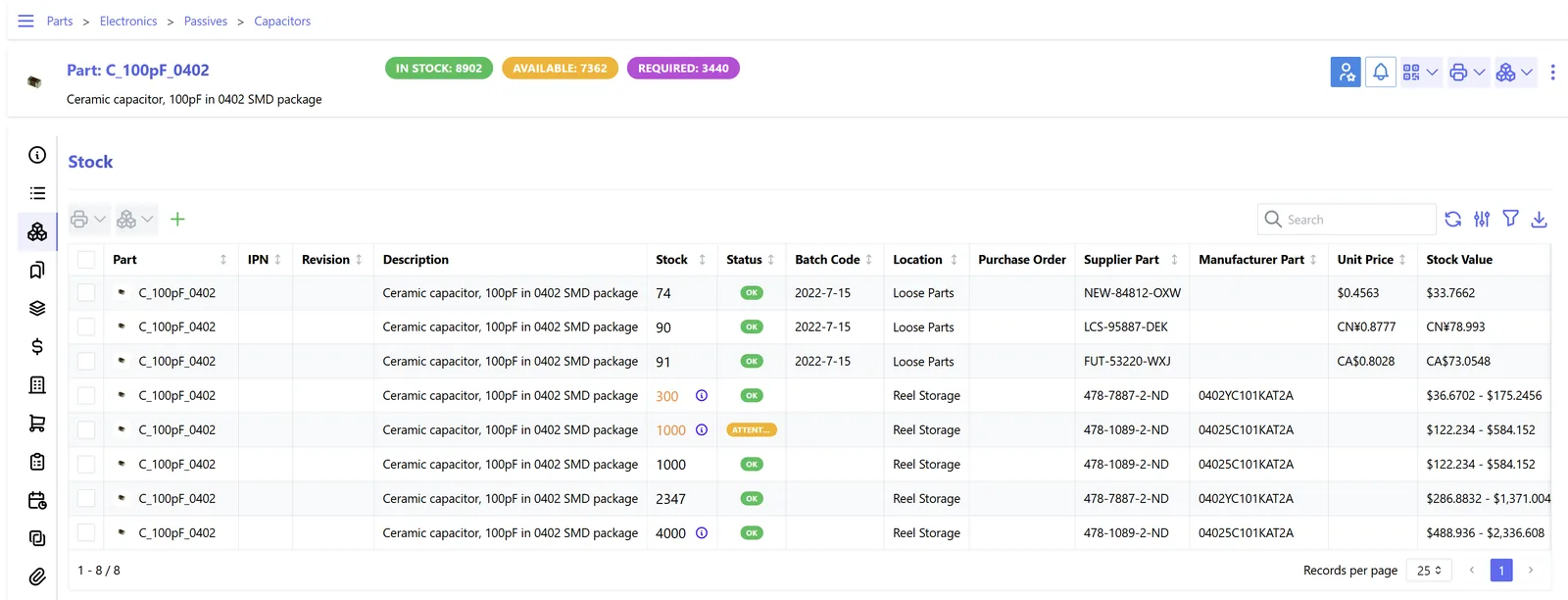
Storekeepers see their location; the commercial team sees stock value and movement across all sites. Our inventory dashboard page shows a general version.
Inventory is a strength in all four. The work is in linking stock moves to projects. Confirm for your edition.
| Zoho | Odoo | ERPNext | Dynamics 365 | |
|---|---|---|---|---|
| Multiple stores | Zoho Inventory warehouses per site | Warehouses and locations per site | Warehouse tree with site warehouses | Locations per site with bins if needed |
| Issue to project | Custom adjustment or transfer with project field; often extended | Stock moves with analytic distribution or project consumption | Stock Entry (Material Issue) with project and cost center | Project journals consume items to project tasks |
| Inter-site transfers | Transfer orders between warehouses | Internal transfers with routes | Stock Entry (Material Transfer) | Transfer orders with in-transit |
| Units of measure | Basic unit conversion | UoM categories with conversion | UOM conversion per item | Item units of measure with conversion |
| Mobile and barcode | Zoho Inventory mobile app | Barcode app (Enterprise) and mobile web | Mobile web with barcode scanning | Mobile app; scanning often via add-on |
| Fit | Small contractors with few stores | Mid-size contractors with many sites | Contractors wanting strong project-coded issues | Larger groups with complex logistics |
Platform detail: Odoo Inventory and ERPNext Inventory.
Connections that keep store data current without double entry.
Inventory records support both VAT and financial reporting. Confirm treatment with your tax advisor.
Material held in the yard is inventory until used. Expensing it on receipt overstates job cost and understates assets, which affects the accounting profit used for corporate tax.
Selling surplus or scrap steel is a taxable supply needing a tax invoice; check with your advisor whether any specific rules apply to the goods involved.
Keep GRNs, issue notes, transfers and count sheets for at least five years under Cabinet Decision 74 of 2023, linked to the transactions in the ERP.
General information, not tax or legal advice. Rules change; confirm current FTA, MOHRE and Ministry of Finance guidance with your advisor.
Typical goals, stated without invented numbers.
Buyers see surplus in the yard and other sites before raising an LPO.
Issues coded to activities give real consumption data.
Transaction history shows where and when stock went missing.
Yard and site stock is valued at month-end instead of written off.
Typical ranges for a contractor with a yard and several sites.
Durations are typical ranges; your plan is agreed after discovery.
Clean item master, units of measure and store locations.
Issue notes, transfers, approvals and barcode labels.
Count yard and site stores and load opening balances by location.
Train storekeepers site by site and review first month's variances.
We configure the system for the rules UAE businesses report against, and test it before go-live.
General information, not tax or legal advice. Confirm current requirements with the FTA, MOHRE or your advisor. See all UAE compliance guides.
On-site workshops in Dubai, Abu Dhabi and Sharjah, and remote or on-site delivery across the Northern Emirates and free zones.
Official sources and references
Facts on this page were checked against these sources in October 2026. Rules change, so confirm current requirements before acting.
Still have a question? Our consultants are happy to help.
Ask an ExpertUsually yes, if the site has a store and a storekeeper. Small sites supplied directly can issue straight from receipt, but the issue should still be recorded against the activity.
Tools can be tracked as serialized items or assets issued to a person or site. Larger plant is covered on construction equipment management.
They can. Most contractors re-charge the receiving project at stock value so both cost reports stay correct, with approval for transfers above a set value.
Connectivity varies on new sites. Some mobile apps queue transactions offline; otherwise we use simple tablets on site Wi-Fi or a 4G router. We check this during design.
Use cycle counts by category rather than one big annual count, scanning items where labels exist, and record reasons for every adjustment.
Mainly for high-value tools and reusable formwork. For bulk materials, barcodes and disciplined issue notes are usually enough; see RFID inventory software.
Related Solutions
Related Industries
Related ERP Platforms
We will review your yard and site store process and show how it runs with project-coded stock in your ERP.
Dubai, United Arab Emirates










