L
O
A
D
I
N
G


Zoho, Odoo, ERPNext, Dynamics 365 and custom ERP, delivered by one accountable team.

We implement Dynamics 365 for UAE companies in clear phases, with UAE VAT, multi-entity and Arabic needs handled in the design rather than patched at the end.
A Dynamics 365 implementation in the UAE is run in phases, with VAT, multi-currency, multi-entity and Arabic needs designed from the start. The first step is choosing the right products: Business Central for most small and mid-sized companies, Finance and Supply Chain Management for complex groups, and Sales, Customer Service or Field Service for customer-facing work.
A Dynamics 365 implementation in UAE is a business project that happens to use software. The work is deciding how quotations are approved, how stock moves between a Jebel Ali warehouse and a Sharjah branch, how intercompany charges are booked between a mainland company and a free zone entity, and how VAT is reported each quarter. The software settings follow from those decisions.
Dynamics 365 is a family of applications. Business Central suits most small and mid-sized companies with finance, inventory, purchasing, sales and projects in one product. Finance and Supply Chain Management are designed for larger, more complex groups. Sales, Customer Service and Field Service cover the customer side. Part of our job, as a Microsoft Partner based in Dubai, is to make sure you implement the right combination and do not over-buy.
Below is how we run the project. If you are early in the decision, our Dynamics 365 consulting service covers readiness and product selection before you commit. If Business Central is already chosen, see the more specific Business Central implementation page.

Most failed rollouts we are asked to rescue share a handful of causes. Our method is designed around avoiding them.
The contract lists modules, not processes. Halfway through, the team discovers that consignment stock, retention on contracts or landed costs were never discussed.
Users ask for screens that look like the old system. Heavy customization follows, which makes every later update more expensive.
Customer, vendor and item masters are cleaned in a rush, so the new system starts with duplicates and wrong VAT treatments.
The partner tests its own configuration. Real users see the system for the first time at training, when changes are expensive.
Without an empowered internal project lead, decisions wait for weeks and the timeline slips.
Each phase ends with a sign-off so both sides know what has been agreed before work moves on.
Workshops with finance, sales, purchasing, warehouse and management. We document each process, mark what standard Dynamics covers and list real gaps.
Chart of accounts, dimensions, legal entities, VAT setup, approval rules, integrations and reports are written into a design document you approve.
We configure in a sandbox, build agreed extensions and integrations, and run iterative demos with your key users every one or two weeks.
Master data and opening balances are loaded in trial runs. Your users run test scripts for real scenarios, including VAT returns and month-end.
Role-based training, a cutover plan with a clear go or no-go decision, and close support in the first weeks after launch.
Documents and assets that stay with you after the project.
These are typical ranges, not guarantees. A focused Business Central rollout for one entity is often 8-14 weeks; multi-entity or Finance and Supply Chain projects take longer.
Durations are typical ranges; your plan is agreed after discovery.
Process workshops, requirements and product confirmation.
Design document, data model and integration specifications.
Configuration, extensions, integrations and regular demos.
Trial loads, reconciliations and user testing.
Cutover, first transactions, first month-end and first VAT period support.
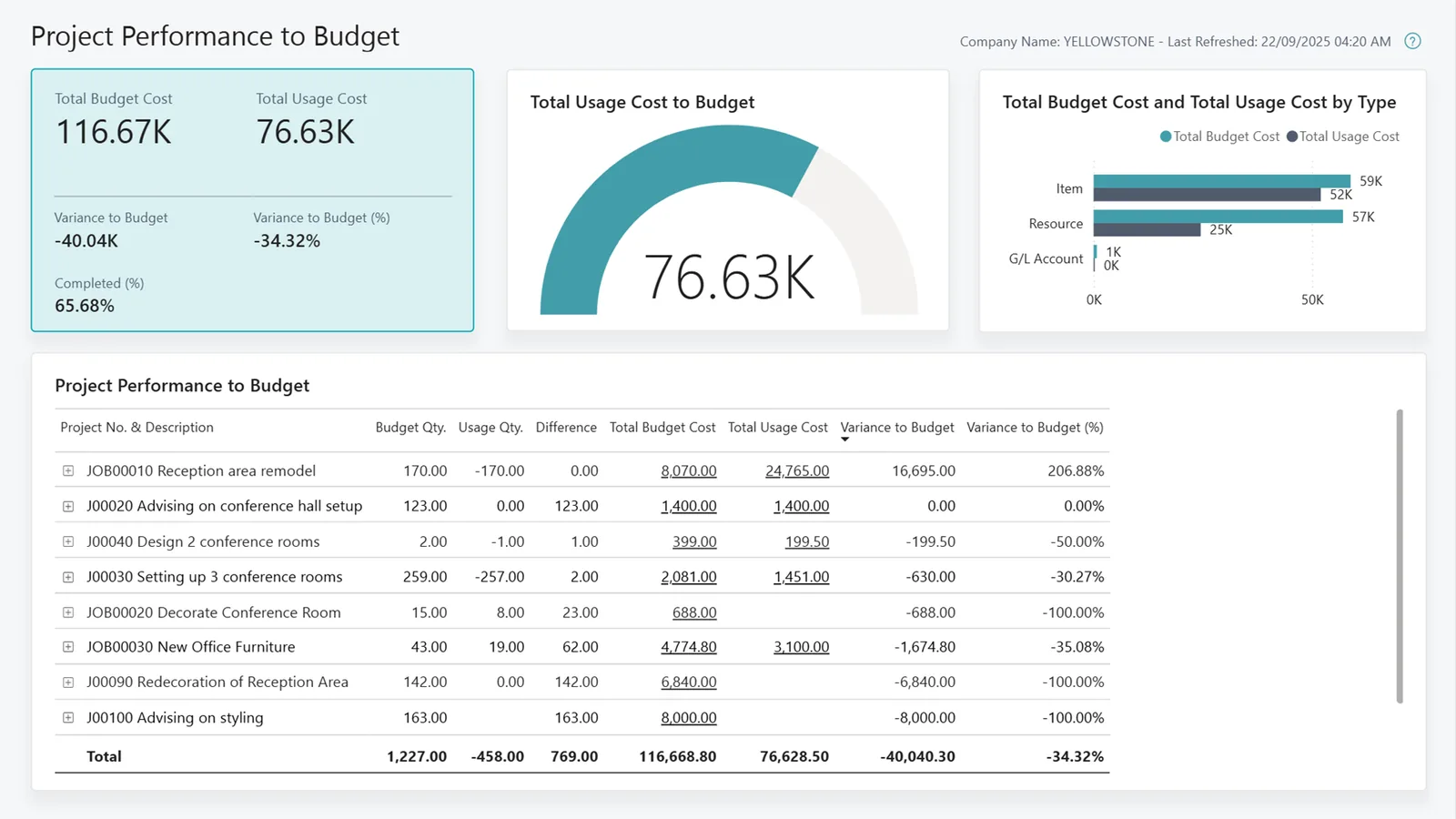
You get a live project view, so status meetings discuss decisions rather than percentages.
Benefits clients report once Dynamics 365 is stable. We do not attach invented numbers to them.
Bank reconciliation, accruals and intercompany entries happen in one system instead of across spreadsheets.
Tax is calculated at the transaction, so the quarterly EmaraTax return is prepared from reports rather than rebuilt by hand.
Sales, purchasing and warehouse teams work from the same quantities and commitments.
Dimensions set up in design let managers see profit by branch, project or product line without waiting for finance.
Pages that cover parts of the implementation in more depth.
We configure the system for the rules UAE businesses report against, and test it before go-live.
General information, not tax or legal advice. Confirm current requirements with the FTA, MOHRE or your advisor. See all UAE compliance guides.
On-site workshops in Dubai, Abu Dhabi and Sharjah, and remote or on-site delivery across the Northern Emirates and free zones.
Official sources and references
Facts on this page were checked against these sources in October 2026. Rules change, so confirm current requirements before acting.
Still have a question? Our consultants are happy to help.
Ask an ExpertIt depends on the apps, number of entities, integrations and data quality. A focused Business Central rollout is often 8-14 weeks, while Finance and Supply Chain projects for groups typically run several months. We give you a dated plan after discovery, with the assumptions written down.
Business Central fits most companies with one to a handful of entities and straightforward supply chains. Finance and Supply Chain Management are built for larger groups with complex consolidation, global operations or advanced manufacturing and warehousing. We recommend after discovery, not before.
Dynamics 365 can be configured for 5% standard-rated, zero-rated, exempt and reverse charge transactions, tax invoices with TRN and VAT return reporting. We set it up based on your tax advisor's guidance. For e-invoicing under PINT AE, we plan integration with an Accredited Service Provider; check the latest Ministry of Finance and FTA guidance on dates.
Yes. We migrate masters, open transactions and opening balances from these systems. We do not implement SAP, QuickBooks or Tally, but we move data out of them regularly.
We quote after discovery, based on scope, apps, integrations and data volume. Licenses are separate from implementation fees. Our ERP implementation cost guide explains the main drivers.
Language support differs between Dynamics 365 apps and changes over time. Arabic is commonly needed for printed documents such as tax invoices, which we handle through report layouts. We confirm the current language options for your chosen apps during discovery.
Related Solutions
Related Industries
Related ERP Platforms
Book a discovery call and we will outline phases, risks and a realistic timeline for your company.
Dubai, United Arab Emirates