L
O
A
D
I
N
G


Zoho, Odoo, ERPNext, Dynamics 365 and custom ERP, delivered by one accountable team.

When you produce under other companies' brands, every customer brings its own formula, packaging, materials and quality rules. Keep them separate, traceable and profitable in one ERP.
A UAE contract manufacturer needs an ERP that keeps each brand owner separate: customer-specific BOMs and formulas with version approval, customer-supplied materials tracked by owner, batch records, QC release with certificates of analysis, and margin by account. It suits private label cosmetics in Sharjah and Ajman, food co-packers in Dubai Industrial City and chemical blenders in Jebel Ali and KEZAD.
An ERP for contract manufacturing in the UAE is for companies that make products for other brand owners: private label cosmetics and personal care in Sharjah and Ajman, food and beverage co-packers in Dubai Industrial City, detergent and chemical blenders in Jebel Ali and KEZAD, or garment units producing for regional fashion labels. The factory is yours, but the specification, the brand and often part of the material belong to the customer.
That creates a different set of controls from a company selling its own products. Each customer has its own approved formula or BOM, its own printed packaging that cannot be used for anyone else, and sometimes raw materials that it buys and delivers to you. The customer expects batch records, a certificate of analysis (CoA) and retained samples, and usually orders against a rolling forecast or a blanket order rather than one-off purchase orders.
This page covers your side as the contract manufacturer. If you are the brand owner sending work out, or you outsource single operations such as plating or printing, read ERP for subcontract manufacturing. The wider set of factory processes is listed under manufacturing ERP processes.
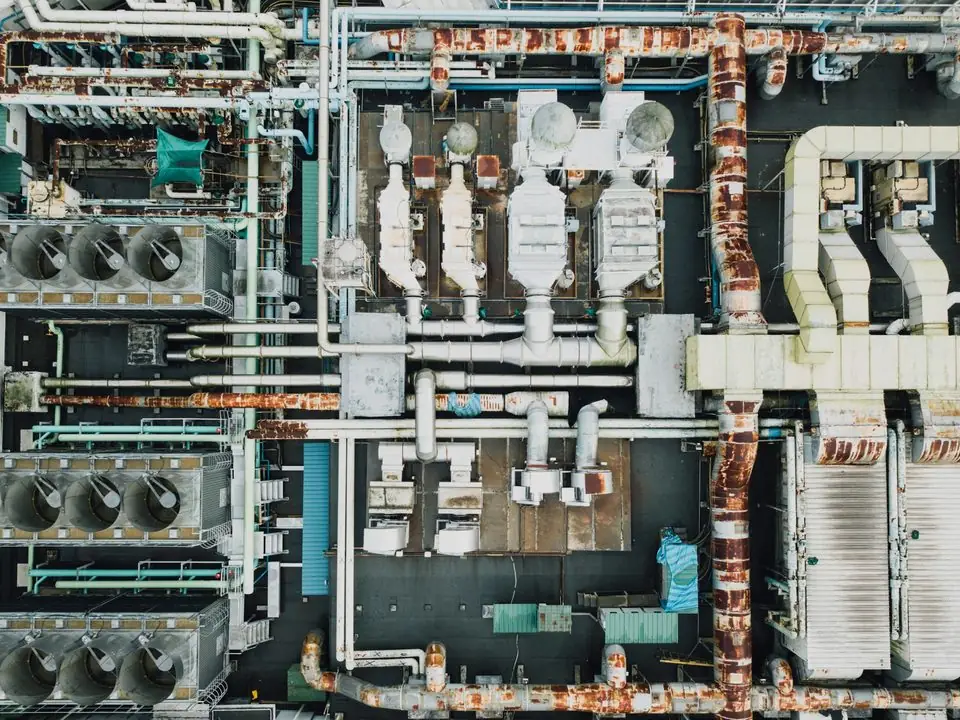
These issues come up when several brand owners share one factory and the controls sit in spreadsheets and paper batch sheets.
A customer delivers fragrance oil or printed cartons, and the storekeeper puts them on the same shelf as company stock. Usage is never reconciled, and the customer later disputes how much was consumed.
The brand owner approves a revised formula, but the batch sheet on the floor still shows the old one. A full batch has to be reworked or written off.
Generic bottles and caps are shared, but labels and cartons are customer-specific. Without customer-level item control, obsolete artwork stays in stock and is used by mistake.
QC results, the batch manufacturing record and the CoA are prepared by hand. Finished goods wait in quarantine while the customer asks for delivery.
Conversion fees are quoted per unit, but changeover time, yield losses and rejected batches are not tracked by customer. Some accounts lose money without anyone noticing.
Customers share monthly forecasts by email. Purchasing orders your own materials late because the forecast never became demand in the system.
A typical flow for a UAE contract manufacturer, from approved specification to invoiced batch.
One shared database: every step updates stock, finance and reports in real time.
Contract manufacturing is mostly about separation and traceability per customer. These modules carry that.
BOMs linked to one customer and SKU, with version control and approval before a new version reaches production.
Materials received from the customer tracked by owner, in their own location, with consumption reported back to them.
Rolling forecasts and call-off orders that feed material planning for your own purchased items.
Production orders per batch with material issues, yield, by-products and labor or machine time.
Lot numbers and expiry dates from raw material to finished goods, so a complaint can be traced in minutes.
Inspection plans per product, quarantine status, release by QA and CoA generated from recorded results.
Standard or actual cost per batch, compared with the agreed conversion fee or unit price for that customer.
Supply agreements with price lists, minimum order quantities, payment terms and price review dates.
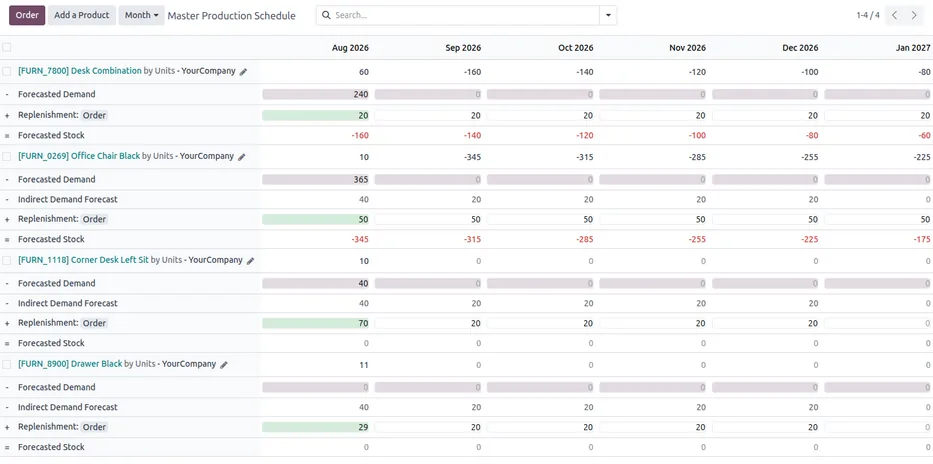
The plant manager and account managers need to see each brand owner's orders, batches and material position together.
All four can run a contract manufacturing operation; they differ in how customer-owned stock and quality release are handled. Confirm details for your edition.
| Zoho | Odoo | ERPNext | Dynamics 365 | |
|---|---|---|---|---|
| Production orders | No native MRP in Zoho Inventory; assemblies or a Zoho Creator app, or a connected MRP | Manufacturing app with BOMs, work centers and manufacturing orders | Work Orders, BOMs and Job Cards in the Manufacturing module | Business Central production orders; Supply Chain Management for process manufacturing |
| Customer-owned materials | Separate warehouse or custom fields; reconciliation usually customized | Inventory consignment setting allows stock with an owner other than the company | Customer Provided Item flag and Material Request type for customer-supplied items | Usually handled with separate locations and non-inventory valuation; confirm design with your partner |
| Formula and BOM versions | Custom versioning in Zoho Creator | BOM versions with PLM app (Enterprise) for change approval | Multiple BOMs per item with a default; changes controlled by workflow | BOM and formula versions with validity dates |
| Batch and expiry tracking | Batch tracking with expiry in Zoho Inventory | Lots and serial numbers with expiry dates | Batch with expiry and batch-wise valuation | Item tracking with lot numbers and expiration |
| Quality and release | Custom checklist app | Quality app (Enterprise) with control points and alerts | Quality Inspection templates on receipt and production | Quality management features vary by product; confirm for your edition |
| Customer forecasts | Import into a custom planning app | Demand forecast in MPS (Enterprise) | Production Plan from Sales Orders and Material Requests | Demand forecasts feeding planning worksheets |
We implement Zoho, Odoo, ERPNext and Dynamics 365 and recommend by fit.
Brand owners and regulators expect data that sits partly outside the ERP.
How you are paid and who owns the goods affects the tax treatment. Confirm the treatment of your agreements with your tax advisor.
If the brand owner supplies the materials and keeps ownership, you may be charging for a service; if you buy materials and sell finished goods, it is a supply of goods. The ERP invoice lines should reflect the contract so the 5% VAT and the tax invoice fields are correct.
Food, cosmetics and personal care products sold in the UAE are subject to municipality and federal registration and labeling rules. Keep product registration references and label versions on the item record so production uses the approved version.
Factories in Jebel Ali, KEZAD or Hamriyah often serve both free zone and mainland brand owners. Delivery documents, customs declarations where needed and VAT treatment should be set per customer, not per product.
Invoices to brand owners will move to the PINT AE structured format through an Accredited Service Provider, phased by revenue from 1 January 2027 and 1 July 2027. Check the latest Ministry of Finance and FTA guidance.
Batch manufacturing records, CoAs and invoices should be kept in the system. Tax records must be retained for at least 5 years under Cabinet Decision 74 of 2023, and your customers' quality agreements may ask for longer.
General information, not tax or legal advice. Rules change; confirm current FTA, MOHRE and Ministry of Finance guidance with your advisor.
Benefits clients look for. Results depend on how consistently the floor records issues, yields and QC results.
Customer-supplied stock and its consumption can be shown to the brand owner at any time.
QC results flow into the release decision and the CoA without retyping.
Changeovers, yield losses and rework are visible per customer, which supports price reviews.
Traceability from finished lot back to raw material lots is available on request.
Ranges for one plant with a handful of brand owners. Regulated products and lab integration take longer.
Durations are typical ranges; your plan is agreed after discovery.
Map customer agreements, material ownership, BOM approval and batch release rules.
Set up customer-specific items and BOMs, owner-based stock, manufacturing, lots and quality checks.
Load formulas, open orders, lots on hand and customer-owned stock balances.
Run real batches for one or two customers first, then add the rest.
Reconcile customer materials monthly and refine yield and costing settings.
We configure the system for the rules UAE businesses report against, and test it before go-live.
General information, not tax or legal advice. Confirm current requirements with the FTA, MOHRE or your advisor. See all UAE compliance guides.
On-site workshops in Dubai, Abu Dhabi and Sharjah, and remote or on-site delivery across the Northern Emirates and free zones.
Official sources and references
Facts on this page were checked against these sources in October 2026. Rules change, so confirm current requirements before acting.
Still have a question? Our consultants are happy to help.
Ask an ExpertIn contract manufacturing you make the complete product for a brand owner. In subcontract manufacturing a company sends part of its own process, such as coating or stitching, to an outside workshop. Many factories do both, and the ERP handles them as separate flows.
Yes, with the right setup. Odoo can record an owner on stock, ERPNext has customer-provided items, and other platforms use separate locations and valuation rules. Consumption is then reported to the customer instead of being expensed to you. See Odoo manufacturing and ERPNext manufacturing for how each works.
Link each BOM to the customer and product, keep only one active version, and require QA approval before a new version becomes active. Production orders then pick the active version automatically.
The same structure applies, with stricter quality steps. Regulated products need validated batch records and release by authorized staff. Our pages on pharmaceutical manufacturing ERP and cosmetics manufacturing ERP cover those details.
Build a cost per batch from materials you supply, machine and labor time, changeover, packaging and overhead, then compare it with the agreed fee. Actual batch cost from the ERP shows which customers or SKUs need a price review.
Yes. Price lists, minimum order quantities, payment terms and review dates can sit on the customer record, and a contract management tool can hold the signed agreement and renewal reminders.
Related Solutions
Related Industries
Related ERP Platforms
Tell us how many customers you produce for and how materials are supplied, and we will show a working contract manufacturing flow.
Dubai, United Arab Emirates