L
O
A
D
I
N
G


Zoho, Odoo, ERPNext, Dynamics 365 and custom ERP, delivered by one accountable team.

When every order is designed for one customer, the ERP has to follow a project, not a product catalog. Connect estimating, drawings, engineering changes, long-lead buying, fabrication and milestone invoices on one job.
Engineer-to-order manufacturers need an ERP built around the job rather than the item. One project number should carry the estimate, design, engineering BOM revisions, long-lead purchases, work orders, hours and milestone invoices. Staged BOM release lets buying start before design is final, and priced engineering change orders turn consultant changes into chargeable variations instead of absorbed cost.
An ERP for engineer to order (ETO) in the UAE is built around the job, not the item. A switchgear panel builder in Sharjah, a steel structure fabricator in Mussafah, an HVAC skid maker in Dubai Industrial City or a marine equipment workshop in Ajman all share the same pattern: the customer sends a specification or a consultant's drawing, the company estimates, wins the order, then designs the product, and only after design approval does it know the final bill of materials.
That sequence breaks most standard manufacturing setups. There is no item code before the order, the BOM changes while material is already on order, the consultant asks for revisions after shop drawings are submitted, and the customer pays against milestones such as advance, drawing approval, factory acceptance test (FAT) and delivery. Profit is decided by how well the estimate, the engineering changes and the actual hours are controlled on that one job.
This page covers the full ETO cycle. If your products are standard designs configured per order, read ERP for make to order manufacturing instead, and for the structure of the BOM itself see ERP for bill of materials.
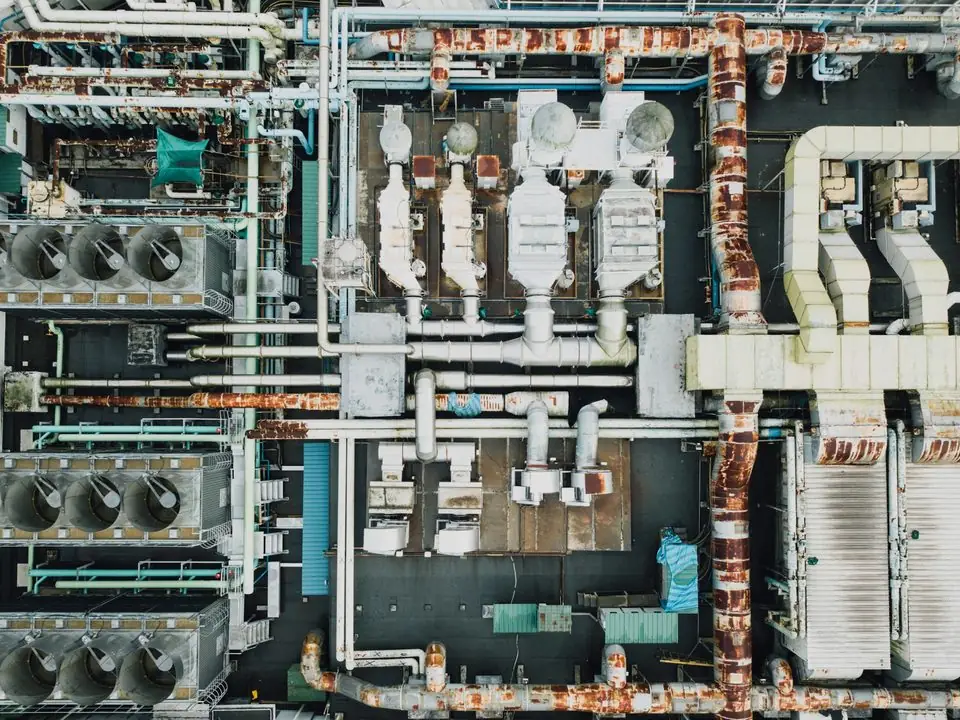
These problems come up repeatedly in UAE workshops that quote and build one-off equipment with Excel, email and a basic accounting package.
The estimator prices steel tonnage, cutting hours and bought-out items in a spreadsheet that never reaches the accounts. After delivery nobody can say which cost line overran.
The consultant adds a platform or changes a motor rating during drawing review, and the workshop absorbs the extra material. Without a change order record, the commercial team has nothing to claim against.
Breakers, VFDs, pumps or special alloy plate can take many weeks to arrive. If buying waits for the final BOM, the delivery date is lost before fabrication starts.
Purchasing works from revision B, the shop floor cuts from revision C and stores issue against an old list. Material gets cut to the wrong size or bought twice.
Welders and fitters move between three jobs in a day and fill a timesheet at the end of the week. Labor cost on each job becomes a guess.
Milestone invoices are raised late because nobody is told that the FAT was passed or that drawings were approved, while suppliers are already paid.
The flow we configure for a typical UAE ETO manufacturer. Every document below is linked to the same project or job number.
One shared database: every step updates stock, finance and reports in real time.
ETO depends on project control and manufacturing working together. These are the modules we set up and link.
Cost build-up by material, labor hours, subcontract and overhead, converted into a quotation and kept as the job baseline.
One project per order with phases for design, procurement, fabrication, testing and delivery, plus billing milestones.
Job-specific BOMs with revision letters, released in stages, so each department works from the approved version.
A change request records the reason, the cost and time impact, the approver and whether it is chargeable to the customer.
Purchase orders tagged to the project, with long-lead items released early against a preliminary BOM.
Work orders per assembly with routing operations, material issues and time booking by work center.
Inspection test plans, weld and NDT records, FAT checklists and punch lists attached to the job.
Estimate versus committed versus actual cost, with milestone and progress invoices raised from the project.
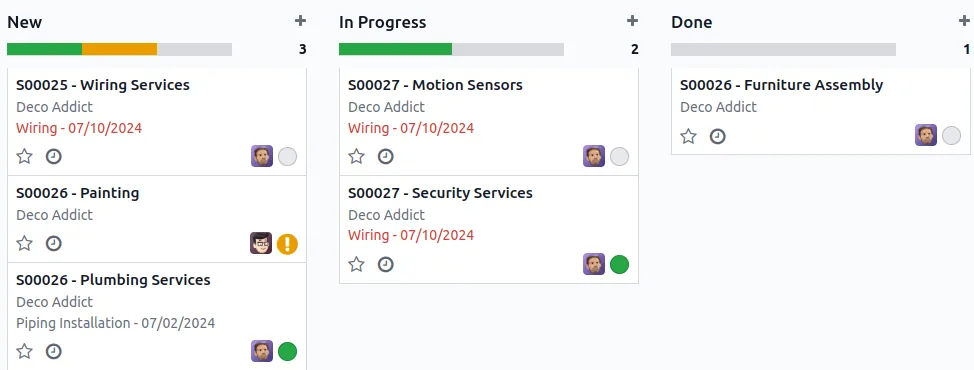
Project managers and the operations head need to see every live job on one screen: where it is, what it has cost and what can be invoiced.
None of these is a dedicated ETO product, so fit depends on how project and manufacturing features combine. Confirm details for your edition and version.
| Zoho | Odoo | ERPNext | Dynamics 365 | |
|---|---|---|---|---|
| Project per order | Zoho Projects linked to Zoho Books or CRM deals | Project app created from the sales order; analytic accounts carry cost | Project linked to Sales Order; costs posted with project dimension | Business Central Projects (Jobs) with tasks and planning lines |
| Job-specific BOM | No native MRP; usually a Zoho Creator app or connected manufacturing tool | Manufacturing app BOMs; per-job BOM versions are possible with configuration | BOM per project or item, with work orders tied to the project | Production BOMs with versions; job-specific assemblies via assemble-to-order or projects |
| Engineering change control | Custom approval flow in Zoho Creator | PLM app (Enterprise) for engineering change orders and BOM versions | Custom doctype or workflow; BOM revisions kept as separate BOMs | Version control on BOMs and routings; formal change management in Supply Chain Management, confirm for your edition |
| Long-lead buying | Purchase orders in Zoho Inventory or Books tagged to the project | Purchase orders linked to the project analytic account and MTO routes | Material Requests against project, converted to POs | Project planning lines create purchase demand |
| Labor time on the job | Zoho Projects timesheets | Work order time tracking and project timesheets | Job Card time logs and Timesheets | Capacity and output journals, project time entries |
| Milestone billing | Zoho Books project invoicing by milestone | Milestone invoicing on sales order lines | Payment schedule and project billing | Project billing by planning line or milestone |
| Best suited to | Smaller workshops with light manufacturing needs | Fabricators wanting MRP, PLM and project in one suite | Cost-conscious fabricators willing to customize | Larger engineering firms on Microsoft 365 |
We implement Zoho, Odoo, ERPNext and Dynamics 365 and recommend by fit, not by product.
Design data starts outside the ERP, so integration is part of the project.
These points shape how invoices, advances and records are configured. Confirm the tax treatment of your contracts with your tax advisor.
Advance payments and milestone invoices can create a VAT tax point before delivery, at the 5% standard rate. The ERP should issue tax invoices with TRN and the prescribed fields on every milestone, not only at final delivery.
Equipment shipped outside the GCC or into a designated zone may follow different VAT treatment depending on the facts. Keep export documents and customs declarations attached to the job so the treatment can be evidenced.
Milestone and progress invoices will be in scope of the PINT AE e-invoicing model, phased by revenue from 1 January 2027 and 1 July 2027. Check the latest Ministry of Finance and FTA guidance before go-live.
Jobs that span financial years need clear revenue and cost recognition. Job-level cost and progress data supports the accounting policy your auditor agrees for corporate tax returns.
Drawings, change orders, test certificates and invoices for each job should stay in the system for at least the 5 years required for tax records under Cabinet Decision 74 of 2023.
General information, not tax or legal advice. Rules change; confirm current FTA, MOHRE and Ministry of Finance guidance with your advisor.
Outcomes our clients aim for. Actual results depend on data discipline and adoption on the shop floor.
Estimate, commitments and actuals are compared while there is still time to act.
Each engineering change has a cost and an approval, so chargeable variations are claimed.
Staged BOM release lets purchasing commit to critical items before design is complete.
Finance sees the milestone the moment drawings are approved or the FAT is signed.
Ranges assume one legal entity and one factory. Multi-site groups or CAD integration add time.
Durations are typical ranges; your plan is agreed after discovery.
Walk through two or three past jobs from enquiry to final invoice and agree the job structure, cost codes and milestones.
Set up estimating templates, projects, BOM revision rules, change orders, purchasing and work orders.
Load open jobs, items and vendors, and connect CAD BOM import if required.
Run new jobs in the ERP while older jobs finish in the old process.
Review the first closed jobs for estimate accuracy and costing gaps.
We configure the system for the rules UAE businesses report against, and test it before go-live.
General information, not tax or legal advice. Confirm current requirements with the FTA, MOHRE or your advisor. See all UAE compliance guides.
On-site workshops in Dubai, Abu Dhabi and Sharjah, and remote or on-site delivery across the Northern Emirates and free zones.
Official sources and references
Facts on this page were checked against these sources in October 2026. Rules change, so confirm current requirements before acting.
Still have a question? Our consultants are happy to help.
Ask an ExpertIn make to order the product is already designed and you build it when an order arrives. In engineer to order the design itself is part of the job, so the BOM and routing do not exist until after the order and they change during the project. That is why ETO needs project control, BOM revisions and change orders.
Yes. A common approach is to release a preliminary BOM with the items that are already certain, such as the main breaker or pump, and raise purchase orders against the project. The rest of the BOM is released after drawing approval. See purchase order management for the PO side.
Record each change as an engineering change order with the drawing revision, cost and time impact and whether it is chargeable. Approved chargeable changes feed a variation to the sales order, similar to the way contractors handle variation orders on site.
Not always. Bought-out and raw material items need codes so stock and purchasing work. Fabricated sub-assemblies unique to a job can use a job-prefixed code or a generic code with the drawing number as a reference.
Each fabricated assembly gets a work order linked to the project, with routing operations such as cutting, welding, painting and testing. Material issues and labor time on the work order roll up to the job cost. Our work order management page explains the shop floor detail.
It depends on how much manufacturing control you need. Smaller workshops often start with project costing and purchasing, while fabricators with heavy BOMs and testing usually need full manufacturing with PLM. We compare options during a short discovery and also review your sales order process, since ETO starts there.
Related Solutions
Related Industries
Related ERP Platforms
Send us one past job with its estimate and final cost, and we will show how it would run from enquiry to milestone invoice in the right ERP.
Dubai, United Arab Emirates