
L
O
A
D
I
N
G


Zoho, Odoo, ERPNext, Dynamics 365 and custom ERP, delivered by one accountable team.

Move machine care out of the maintenance supervisor's notebook and into the ERP, where preventive jobs, breakdown repairs, spare parts and production plans share one record.
Yes. An ERP for machine maintenance in UAE factories links the equipment register, preventive plans by running hours or dates, breakdown requests, spare parts and the production schedule in one record. Jobs are scheduled into production gaps and closed with parts, hours and cause recorded. For most SMEs, maintenance features in Odoo, ERPNext or Dynamics 365 are enough without a separate CMMS.
An ERP for machine maintenance in the UAE connects three things that usually live apart: the list of production equipment, the maintenance jobs done on it, and the production plan that depends on it. In a typical plant in Dubai Industrial City, Sharjah's industrial areas or KIZAD, the injection molding machines, CNC lathes, filling lines, compressors and chillers are maintained from a whiteboard and a spreadsheet, while production is planned in a separate system that assumes every machine is always available.
UAE operating conditions make this gap expensive. Summer heat pushes compressors, hydraulic units and panel air conditioners close to their limits, fine dust clogs filters faster than OEM manuals assume, and many critical spares come from Europe, China or India with lead times of several weeks. A missed oil change or an unplanned bearing failure in August can stop a line while a part sits in transit at Jebel Ali.
This page covers the maintenance process itself: equipment register, preventive plans, breakdown requests, spare parts and cost. Measuring and analyzing stoppages is covered in ERP for manufacturing downtime, and if you need a standalone tool for buildings, fleets and facilities as well as machines, see maintenance management software.
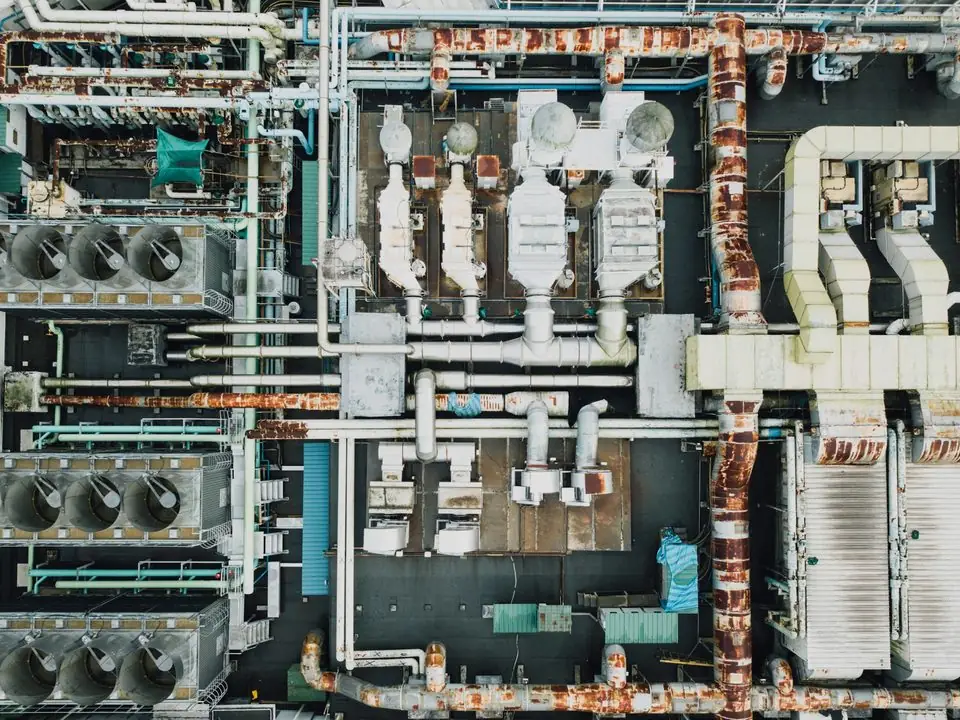
Most of these come from maintenance and production working from different information.
OEM service intervals are printed in the manual and copied to a wall chart, but nobody is reminded when 500 running hours are reached. Jobs are done when the supervisor remembers, which in a busy month means not at all.
An operator calls the technician, the fix happens, and nothing is recorded. Three months later nobody can say how often that filler head failed or what was replaced.
Critical spares such as mechanical seals, heater bands and servo drives are kept in a cage without stock levels in the system. The store either over-buys slow items or discovers the last unit was used last month.
Planned shutdowns are agreed verbally and then overridden by an urgent customer order. The machine runs past its service interval and the deferred job becomes a breakdown.
Labor, parts and contractor invoices are booked to a general repairs account. When management asks whether to overhaul or replace a 15-year-old press, there is no number to work from.
AMC providers for chillers, compressors and generators visit and leave a service sheet. Visits are not checked against the contract schedule and their findings are not followed up.
Preventive and breakdown jobs follow the same path once they are created, so every intervention ends with parts, hours and cause recorded against the machine.
One shared database: every step updates stock, finance and reports in real time.
Maintenance works best when it shares data with production, stores and finance instead of running as an island.
Each machine with tag number, location, work center, manufacturer, serial number, commissioning date, warranty and linked documents such as manuals and wiring diagrams.
Task lists with intervals by days, running hours or cycle counts. See preventive maintenance software for plan design in more depth.
Breakdown requests from operators and planned jobs from the schedule, each with priority, assigned team and checklist. Details in maintenance work order software.
Spares as stock items with bin locations, minimum levels and preferred suppliers, issued against the job so consumption is traceable.
The machine's status is visible to planners, so a work center under maintenance is not loaded with production orders.
Purchase requests for spares and external repairs, and service contracts with visit schedules for chillers, compressors and generators.
The machine linked to its asset record, so major overhauls can be reviewed for capitalization and depreciation stays aligned.
Cost per machine, overdue preventive jobs, MTBF and MTTR, and repeat failures by component.
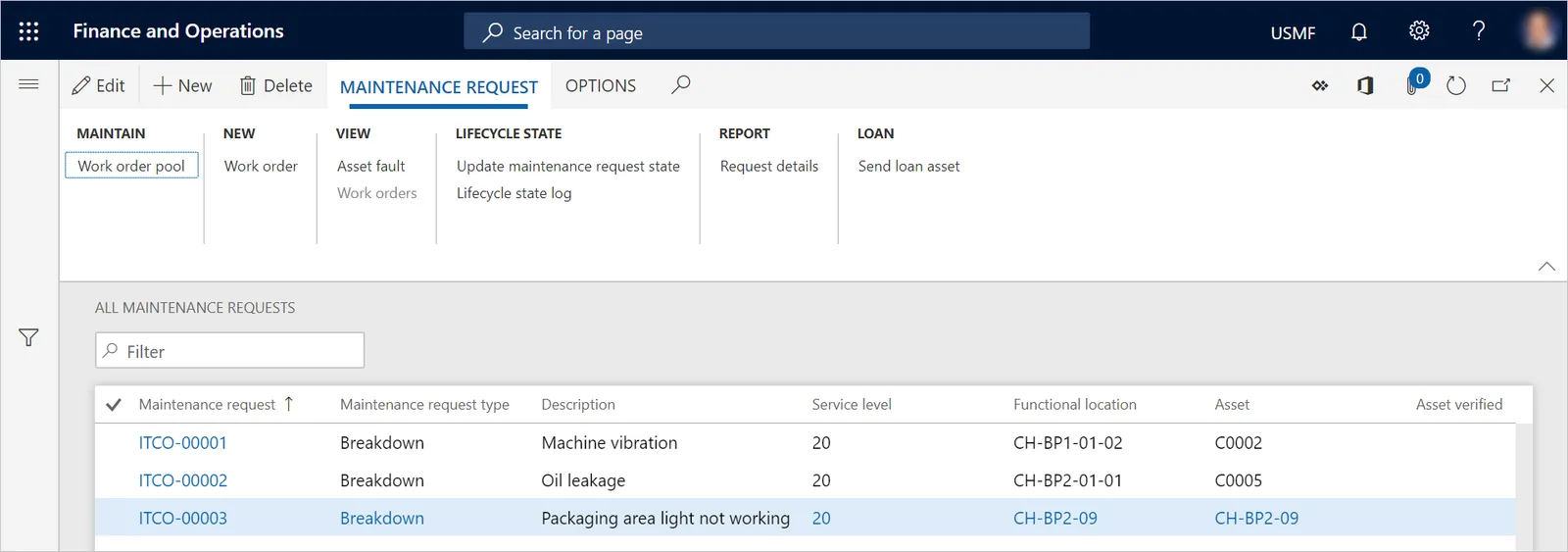
A maintenance dashboard built from closed jobs shows whether the plan is being followed and where money is going.
All four platforms can support plant maintenance, but the depth differs. Confirm features for your edition before deciding.
| Zoho | Odoo | ERPNext | Dynamics 365 | |
|---|---|---|---|---|
| Equipment register | No dedicated maintenance app in Zoho Books or Inventory; typically a Zoho Creator app linked to Inventory items | Equipment records in the Maintenance app, linkable to manufacturing work centers | Asset and Asset Maintenance records, linked to Workstations by custom field | Business Central uses fixed assets and machine centers; Supply Chain Management includes Asset Management |
| Preventive scheduling | Custom schedules and reminders in Creator or Zoho Flow | Preventive requests by frequency; recent editions add usage-based triggers, confirm for your edition | Asset Maintenance tasks with periodicity and assigned team | Business Central typically via an add-on or service management; SCM Asset Management supports time and counter-based plans |
| Breakdown requests | Creator form, often with mobile app and photo upload | Maintenance requests from the app or a work center, with Kanban stages | Asset Repair records with cause, downtime and cost | SCM work requests and maintenance work orders |
| Spares consumption | Inventory adjustments or Creator integration with Zoho Inventory | Components consumed through Inventory, often with a small customization | Stock Entry linked to Asset Repair | Item journals in Business Central; spare parts on work orders in SCM |
| MTBF and MTTR | Built in Zoho Analytics | Shown on equipment in the Maintenance app | Custom report or dashboard | Reports in SCM Asset Management; Power BI for Business Central |
| Link to production planning | Manual unless custom built | Maintenance can block work center time in the planning view | Workstation status by custom field or script | Capacity calendars and absences on machine centers |
Feature names and availability change between versions and editions. We confirm the exact fit during discovery.
Most plants start with manual requests and add machine data once the basic process is stable.
Maintenance records support safety, tax and insurance reviews. Confirm specifics with your advisors.
Safety frameworks such as Abu Dhabi's OSHAD and Dubai Municipality requirements expect inspections of lifting gear, pressure vessels and guards to be recorded. Storing inspection certificates and due dates on the equipment record makes them easy to produce.
Routine repairs are usually expensed, while major overhauls that extend a machine's life may be capitalized. Linking jobs to the fixed asset record helps finance apply a consistent policy for corporate tax; confirm treatment with your tax advisor.
Imported spares and overseas service visits may involve reverse charge VAT. Correct supplier and tax codes on maintenance purchases keep the VAT return clean.
Tax records are generally kept for at least five years under Cabinet Decision 74 of 2023. Maintenance costs posted through the ERP keep the supporting job, parts and invoice together.
General information, not tax or legal advice. Rules change; confirm current FTA, MOHRE and Ministry of Finance guidance with your advisor.
The benefits come from planned work replacing reactive work, and from decisions based on recorded history.
Preventive jobs are triggered by actual running hours, so service is done before wear turns into failure.
Critical parts have minimum levels and lead times, so the store reorders before the last unit is used.
Cost and failure history per machine gives management facts for overhaul and capital spending decisions.
Planners see maintenance windows in the schedule and stop loading machines that are due for service.
A focused machine maintenance rollout often takes 6-12 weeks, depending on the number of machines and data quality.
Durations are typical ranges; your plan is agreed after discovery.
Walk the plant, tag machines, collect serial numbers, manuals and OEM intervals, and agree criticality ratings.
Build preventive task lists, set intervals, and create spare parts as stock items with minimum levels.
Set up requests, teams, approvals and the link to production planning; add run-hour readings if available.
Run the process on one production line, refine checklists and train operators to raise requests.
Extend to all lines and start weekly maintenance reviews from the dashboard.
We configure the system for the rules UAE businesses report against, and test it before go-live.
General information, not tax or legal advice. Confirm current requirements with the FTA, MOHRE or your advisor. See all UAE compliance guides.
On-site workshops in Dubai, Abu Dhabi and Sharjah, and remote or on-site delivery across the Northern Emirates and free zones.
Official sources and references
Facts on this page were checked against these sources in October 2026. Rules change, so confirm current requirements before acting.
Still have a question? Our consultants are happy to help.
Ask an ExpertFor most UAE SMEs with up to a few hundred machines, the maintenance features in Odoo, ERPNext or Dynamics 365 are enough, and keeping them inside the ERP links spares, purchasing and production. A dedicated CMMS makes sense for very large asset bases or regulated industries with complex inspection regimes.
Yes, on most platforms, either through built-in counters or meter readings entered by operators or imported from the PLC. Usage-based triggers fit machines that run irregularly, which is common when demand drops in summer or during Ramadan.
Record the contract, its visit schedule and the covered equipment, then log each visit as a job with the service report attached. Missed or late visits become visible and any recommended repairs can be raised as follow-up requests.
This page covers the full machine maintenance cycle in a factory. Corrective maintenance software focuses on handling failures after they occur, which is one part of that cycle.
Odoo's Maintenance app suits SMEs that want maintenance close to manufacturing; see Odoo Maintenance in the UAE. ERPNext suits cost-conscious plants comfortable with some configuration, and Dynamics 365 Supply Chain Management suits larger operations needing advanced asset management.
Yes. Requests can come from a mobile app, a tablet at the work center or a QR code on the machine. The request records the machine, the time and a photo, which also feeds downtime analysis.
Related Solutions
Related Industries
Related ERP Platforms
Send us your machine list and current service routine, and we will map how preventive and breakdown work would run in your ERP.
Dubai, United Arab Emirates










