L
O
A
D
I
N
G


Zoho, Odoo, ERPNext, Dynamics 365 and custom ERP, delivered by one accountable team.

We connect handheld scanners, mobile cameras and label printers to ERPNext so that every receipt, transfer, pick and count in your UAE warehouse is captured by scan rather than typed from paper.
Yes. ERPNext stores multiple barcodes per item, such as EAN-13, UPC-A or Code 128, and has scan fields on Purchase Receipt, Stock Entry, Pick List, Delivery Note and POS. Any keyboard-mode USB or Bluetooth scanner works without extra software. UAE warehouses mainly need supplier barcode mapping, batch and expiry capture at receipt, label printing and storekeeper training.
ERPNext barcode integration UAE projects are usually less about software and more about discipline at the dock. ERPNext already stores one or more barcodes per Item (EAN-13, UPC-A, Code 128 and other types in the Item's Barcodes table) and has a scan field on the main stock and sales documents. The work is in deciding which barcode lives on which pack size, getting suppliers' codes into the item master, choosing hardware, printing labels that match, and training storekeepers to scan instead of searching by item name.
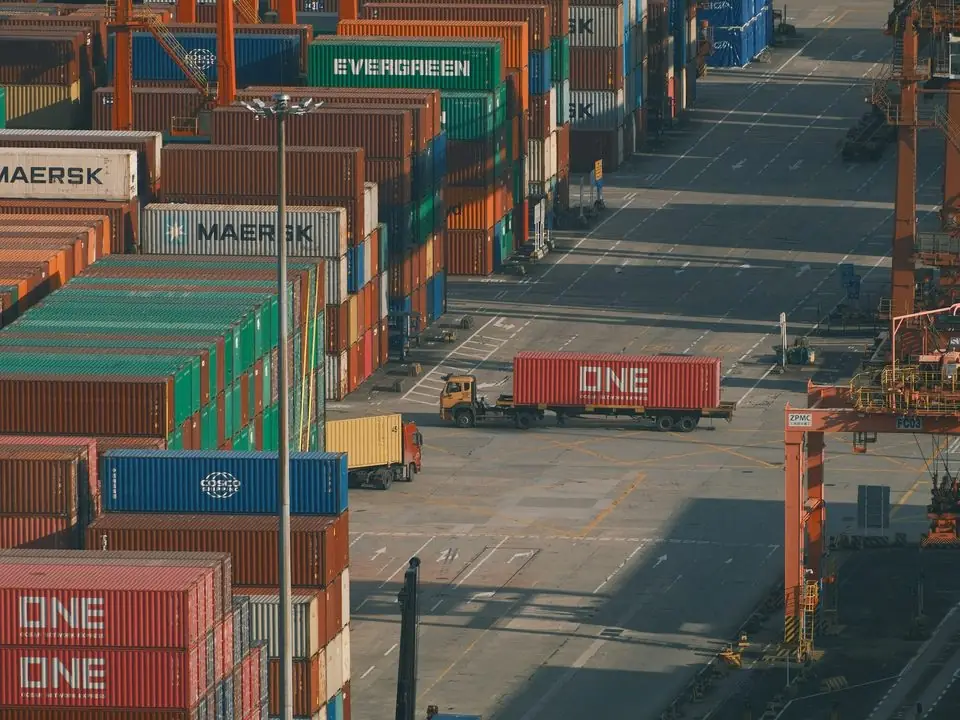
In a typical Dubai or Sharjah trading company, a container arrives at a Jebel Ali or Al Quoz warehouse with supplier cartons carrying one barcode, inner packs carrying another, and some items with no usable code at all. The storekeeper counts on paper, the data entry clerk keys a Purchase Receipt the next morning, and batch numbers or expiry dates are typed by hand, if at all. Running ERPNext inventory this way wastes most of its value. By the time the GRN is posted, stock has already been picked for a delivery note that ERPNext says cannot be fulfilled.
This page covers ERPNext only: the native scanning features, the label printing options, batch and serial capture, and when a custom Frappe app or the REST API is needed. For a platform-neutral view, see our ERP barcode integration page; if you are comparing platforms, the Odoo barcode integration page explains how Odoo handles the same work.
The products we configure, integrate and support on projects like this one.
 ERPNext
 Frappe HR
 Frappe Framework
 Frappe CRM
Product names and logos are trademarks of their respective owners and are shown only to identify the software we implement.
These are the problems we see most often when UAE warehouses run ERPNext with manual item selection.
A 2.5mm and a 4mm cable, or a 500ml and 1L bottle, sit next to each other with near-identical names. Picking by description means the wrong variant leaves the warehouse and comes back as a credit note.
Receipts are counted on paper and keyed in later, so stock is invisible to sales for hours. Sales staff then promise stock that ERPNext shows as zero, or block orders for stock that is physically on the shelf.
Food, cosmetics and pharma distributors need batch and expiry on every receipt for recalls and municipality inspections. Manual typing produces mismatched batch IDs that make FEFO picking unreliable.
Annual and cycle counts are done on printed sheets and reconciled in Excel. The resulting Stock Reconciliation posts large adjustments that nobody can explain to the auditor.
Each supplier uses its own EAN or internal code, and the same product arrives under three codes. Without a mapping, scanners return 'item not found' and staff fall back to typing.
Bin and carton labels are printed from Word or a label tool that has no link to ERPNext, so a renamed item or a new batch produces labels the scanner cannot resolve.
A typical receipt-to-delivery flow once scanning is in place. Each scan adds or increments a line on the open ERPNext document; the user still reviews and submits it.
One shared database: every step updates stock, finance and reports in real time.
Most of this is native ERPNext behavior; the notes say where configuration or a custom app is usually involved.
| Data | Direction | Trigger / frequency | Notes |
|---|---|---|---|
| Item barcodes (EAN, UPC, Code 128) | ERPNext master to scanner lookups | Real time on each scan | Stored in the Item Barcodes table; one item can carry several codes, each optionally tied to a UOM such as carton or piece |
| Purchase Receipt lines | Scanner to ERPNext | Each scan at the dock | Scan field adds the item or increases quantity; receiving against the PO keeps rate and tax from the order |
| Batch numbers and expiry dates | Scanner / user to ERPNext | At receipt | Recent versions use Serial and Batch Bundles; GS1 barcodes that encode batch and expiry usually need a small parsing customization |
| Serial numbers | Scanner to ERPNext | At receipt and at delivery | Each serial scanned once; warranty and AMC history then follow the serial |
| Stock transfers and putaway | Scanner to ERPNext | Per movement | Stock Entry (Material Transfer) with source and target warehouse; bin-level control needs sub-warehouses or a custom location field |
| Pick List and Delivery Note | Scanner to ERPNext | Per order | Pick List supports scanning to confirm picked quantities before the Delivery Note is created |
| Stock Reconciliation counts | Scanner to ERPNext | Cycle or year-end count | Scanned quantities replace counted figures; differences post to the stock adjustment account |
| Labels (item, batch, bin, carton) | ERPNext to printer | On receipt or on demand | Print formats can render barcodes; Zebra-style raw printing is typically handled through QZ Tray or a print service |
| POS sales | Scanner to ERPNext POS | Each checkout | Point of Sale accepts keyboard-wedge scanners; the VAT-inclusive rate comes from the item price list |
Behavior differs between ERPNext versions. We confirm against your installed version (v14, v15 or later) during discovery.
Most UAE warehouses need only the first three. The rest apply when you have high volumes, GS1 labels or a separate WMS or handheld app.
A focused barcode rollout on an existing ERPNext site often takes a few weeks; it takes longer if the item master needs cleaning first.
We export items, check which have supplier codes, find duplicates and decide the barcode per UOM. This is usually where the most time goes, and it pays back in fewer 'item not found' scans.
We test your scanners against EAN, Code 128 and any GS1 labels you receive, then design item, batch, bin and carton labels as ERPNext print formats sized for your printer.
We enable scanning on Purchase Receipt, Stock Entry, Pick List, Delivery Note, Stock Reconciliation and POS, set batch and serial rules on items, and add validation scripts where needed, for example blocking an expired batch.
One zone or one warehouse runs on scanning for a week or two. We review scan errors, unmapped codes and slow steps before extending to other sites.
Storekeepers, pickers and supervisors are trained on the floor with their own devices. Supervisors get the reports they need to see unscanned or manually edited lines.
Barcode scanning does not change your tax obligations, but it does improve the records that support them. Confirm specifics with your tax advisor.
Scanning only picks the item; the 5% VAT, TRN and tax invoice fields still come from item tax templates and customer settings. We test that POS and sales invoices created from scans carry the correct tax treatment.
Scan-based receipts and counts create a dated, user-stamped stock ledger that supports stock valuation for corporate tax and audit. Tax records generally need keeping for at least 5 years (7 for real estate).
Under the UAE e-invoicing rules, invoices are exchanged in PINT AE format via an Accredited Service Provider. Clean item codes help line-level data on those invoices; see our ERPNext UAE e-invoicing page and check the latest Ministry of Finance / FTA guidance.
Food, cosmetics and healthcare distributors may face batch and expiry traceability expectations from municipalities and health regulators. ERPNext batch tracking, captured by scan, makes recall reports far quicker to produce.
General information, not tax or legal advice. Rules change; confirm current FTA, MOHRE and Ministry of Finance guidance with your advisor.
Benefits we typically see described by warehouse teams, without promising specific figures.
Receipts are posted as cartons are unloaded, so sales and purchasing see real stock the same day.
Scanning confirms the exact variant and quantity before a Delivery Note is submitted, cutting returns and credit notes.
Cycle counts become a routine weekly task, and adjustments can be traced to a user, a date and a bin. Weekly reviews of these trends fit naturally into an ERPNext Power BI warehouse report.
FEFO picking and recall reports work because batch numbers were captured at the dock, not typed later.
We configure the system for the rules UAE businesses report against, and test it before go-live.
General information, not tax or legal advice. Confirm current requirements with the FTA, MOHRE or your advisor. See all UAE compliance guides.
On-site workshops in Dubai, Abu Dhabi and Sharjah, and remote or on-site delivery across the Northern Emirates and free zones.
Official sources and references
Facts on this page were checked against these sources in October 2026. Rules change, so confirm current requirements before acting.
Still have a question? Our consultants are happy to help.
Ask an ExpertYes. Items can hold several barcodes, and the main stock and sales documents have a scan field that adds the matching item. Any scanner that works as a keyboard (USB or Bluetooth) works without extra software. Customization is only needed for special cases such as GS1 parsing or bin-level rules.
Print formats can render barcodes as HTML or PDF for any label printer. For raw ZPL printing to Zebra printers, a common approach is QZ Tray configured with ERPNext. We test label size, density and scan quality on your actual printer before go-live.
Recent ERPNext versions allow camera scanning from the browser on mobile devices. It works well for low-volume counts and receipts; for busy picking areas, a rugged Android handheld with a built-in scanner is usually faster and more durable.
If the supplier label carries batch as a separate barcode, it can be scanned into the batch field. GS1-128 or GS1 DataMatrix labels that encode item, batch and expiry in one code usually need a small custom script to split the values. We set this up as part of ERPNext customization.
POS accepts scanned items directly. Online orders from Shopify or WooCommerce arrive as sales orders and are then picked and verified by scan like any other order; see our ERPNext Shopify integration page for that side of the flow.
Most UAE SMEs do not. ERPNext with warehouses, sub-warehouses, pick lists and scanning covers receiving, transfers, picking and counts. A dedicated WMS becomes worth considering for very high order volumes, wave picking or automated equipment, and it would then connect through the ERPNext integration API.
Related Solutions
Related Industries
Related ERP Platforms
Tell us your sites, devices and label types, and we will map the scan points, hardware and item clean-up needed for your ERPNext setup.
Dubai, United Arab Emirates